Intro
In reality, big readers naturally become better writers. The trick while reading is studying literature like you would a writer, and by the end of this blog post, you’ll have the knowledge you need to know what to look for.
What is Reading like a Writer?
According to writers.com’s article, “How to Read Like a Writer,”
“Reading is like entering a doorway into someone else’s story. Reading like a writer means examining how the doorway was built on the way in.”
When reading, you will undoubtedly make claims, notes, or mental annotations to key phrases, moments, language, or other characters that stand out to you.
However, when you are reading a novel like a writer, you are uncovering all the techniques and choices the writer made to either give you a good or a bad book.
By reading like a writer, you are noting what works in good stories and what doesn’t. You can fully appreciate a successful novel and, with time, replicate it in your own way.
Why Should You Read like a Writer?
Virtue, ultimately, is everyone’s goal in life.
Aristotle on Pursuing a Virtuous Life
Aristotle is quoted as believing that a virtuous life pursues unimpeded activities, i.e., collecting knowledge. When you are actively trying to better your own knowledge, you are performing a virtuous task, one that is neither evil nor damaging. You are simply bettering your own intelligence to enjoy life better.
Ability to Analyze and Converse Intellectually
Aristotle puts it into perspective with this example: people studying paintings in an art museum. To those who aren’t as familiar with the craftwork, techniques, geometry, color theory, etc., that go into a painting, they wouldn’t be able to analyze its design. They aren’t able to appreciate how high quality the piece is and why it is undeniably a success.
However, those who have studied and have more background knowledge on painting will be able to better appreciate the skill and the conversation stimulated from it.
Therefore, reading is much the same. You will better judge writing for its quality and have critical discussions of the author’s work once you have dedicated regular time to avid reading.
What You Should Look For
Once you’ve decided you want to pursue writing, your reading technique will noticeably change.
What Readers Look for
A normal reader, one who doesn’t write additionally, will look for different things in a novel than a writer. A reader will look for familiar tropes they enjoy, characters’ personalities that could interest them, and genres that normally leave them on the edge of their chair.
However, they aren’t looking deeply at the writing or the underlying techniques the writers used to create a memorable and successful story.
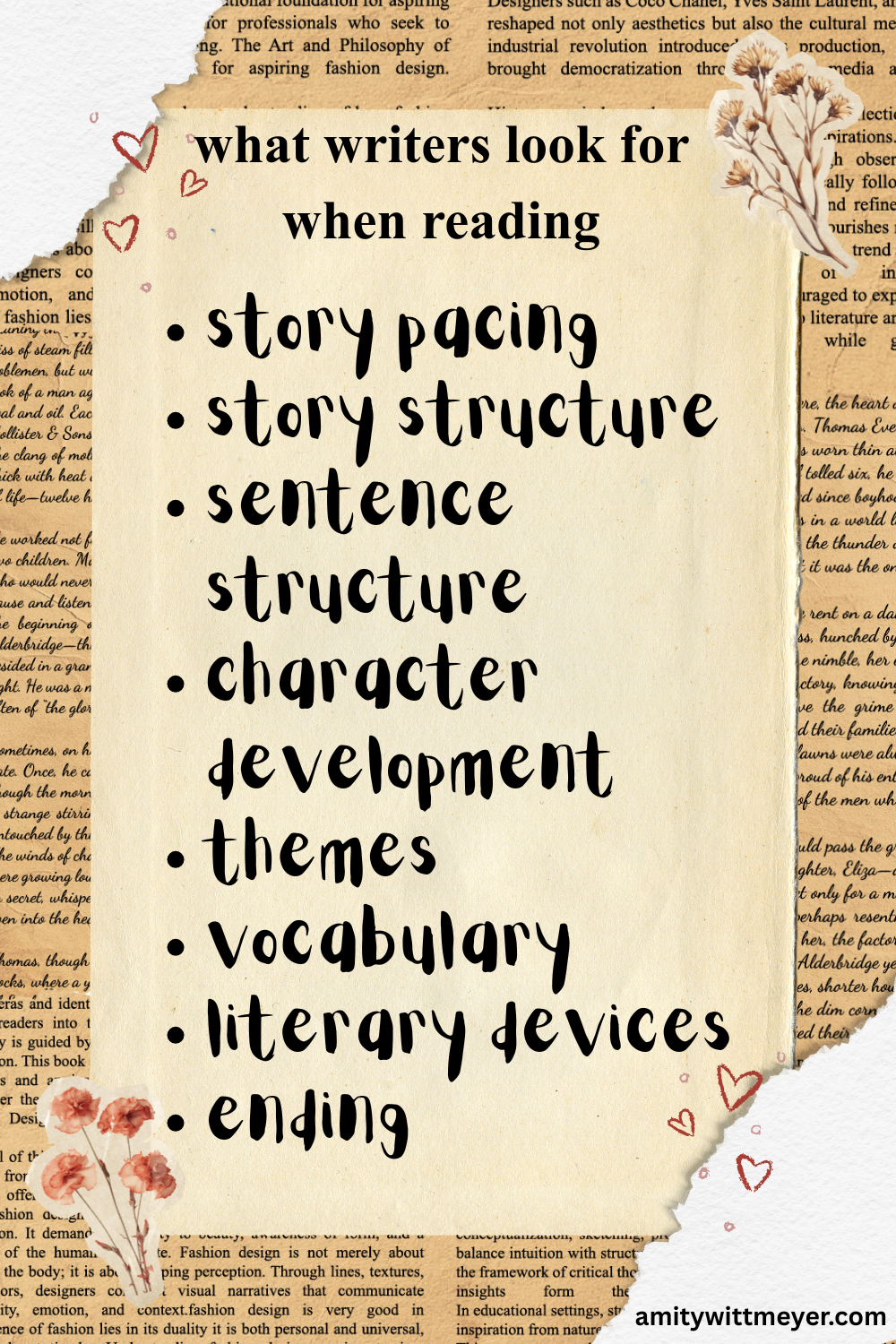
What Writers Look for
However, once you’ve begun writing, you will start to notice a great deal more techniques used.
A writer will look at the style of writing, vocabulary, literary devices, character development, choice of narrative perspective, themes, symbolism, etc.
All these various things to annotate naturally are used to answer the question: Is this a quality piece of writing? How did the writer fail or succeed?
Read Like a Writer Activity Sheet
Now, as you begin to read your next novel, try to take a few moments to look for various ways the writer succeeds in telling their story. Taking notes while you read also helps comprehension and retention skills.
Learn more about the benefits of practicing note-taking or journaling while you read or when you work on your next project in the blog post below!
What Writers Look For
Story Pacing
How are the stakes presented to the reader? Is there tension immediately from the inciting incident? Does the story feel too fast-paced or too slow? How often is the writer reminding us of the outside pressure the characters are battling against?
Story Structure
Next, a writer will be looking at how a story is structured.
- Does it follow a typical linear story with rising and falling action?
- Is there a climax?
- Are the stakes resolved at the end?
- Or is the story circular?
- Does it end on a cliffhanger?
- How does the structure help reveal the main themes of the story to the reader?
To better understand how to professionally format your novel, check out the blog post below!
Additionally, learn which narrative perspective to write your story in in the other blog post below!
Sentence Structure
At the very root of good writing is good sentence structure. A writer will always be analyzing how the author of a story has paced and worded their sentences based on the narrative perspective and overall tone of the story.
A writer will look to see how rhythmic a paragraph reads, how humorous or dry the phrasing is, and how poetic the language comes across.
Character Development
Next up, character development. To make a good story, you need characters that seem real to your reader. Whether they have relatable qualities or issues, their actions and feelings are easily comprehensible and entertaining. To create authentic characters, you need to study a person’s needs vs their wants.
For more advice on character development, check out the blog post below!
Themes
Sure, your novel may be a romance, but what other themes are explored in the story? A quality novel has many themes that are layered throughout the book. Such themes could include:
- man vs. man
- man vs. self
- man vs. society
- man vs. nature
- Coming of age
- Pursuit of happiness
Vocabulary
Ultimately, quality writing is essential when trying to expand your reading habits and grow your writing skills. Therefore, if you are reading an appropriately challenging story, there should be new vocab words on each page that help you stop, think, and figure out their meaning. Vocab words are your tools, and you must continue to add to your knowledge.
Find a new inspiring list of vocab words below!
Literary Devices
Within writing, there are a great many techniques used to creatively express a feeling, scene, or character. Some techniques for varying the structure of language are called literary devices.
ex:
- alliteration
- Metaphor
- Simile
- Analogy
- Imagery
- Symbolism
- Personification
- Hyperbole
- Irony
- Juxtaposition
- Paradox
- Allusion
- Allegory
- Ekphrasis
- Onomatopoeia
- Pun
Ending/Overall Impact
I think I can say for certain that the ending of a story will impact the reader’s overall perception of the quality of writing they just finished.
Therefore, when you read a novel, focus on its resolution. What was and wasn’t resolved? Did the characters get what they deserved? Does the ending make sense? How is the message of the overall story impacted by the ending?
Conclusion
By being able to read like a writer, you can analyze the quality of a novel’s writing and have stimulating conversations that will open doors for your own writing journey. Try to look for these specifics next time you open a story!

Leave a Reply