Disclaimer: This post contains affiliate links; I may earn a commission if you click and buy, at no extra cost to you.
Crime and Punishment Intro
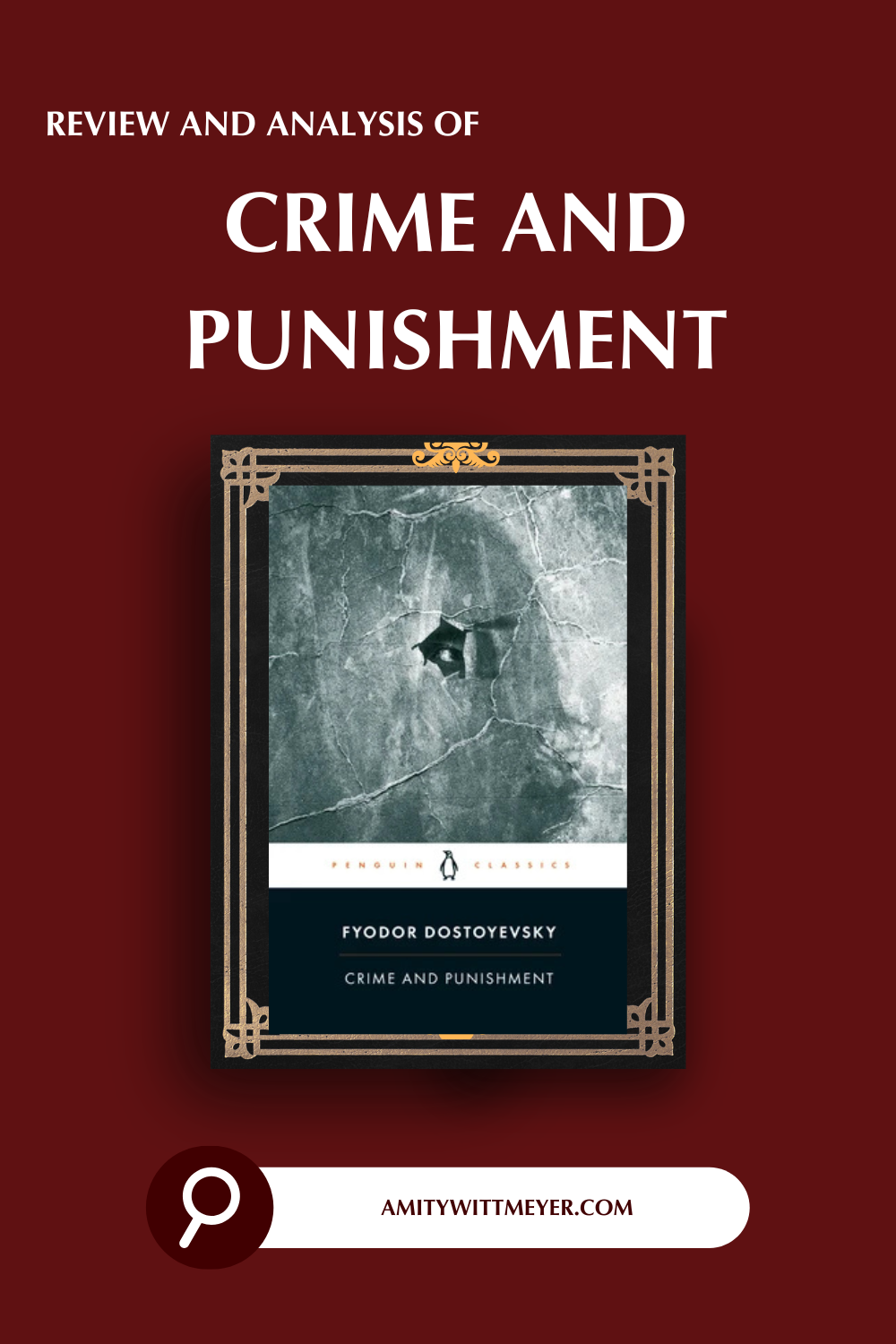
Crime and Punishment by Fyodor Dostoevsky is perhaps one of the most accessible and greatest novels in literature. By the end of this blog post, you will understand its various themes of self-fulfillment vs human laws, which have transcended generations and earned its place among the classics of literature.
Backpage Summary (as seen on the novel)
From the Wordsworth Classics publications, Crime and Punishment is a
“tragic novel built out of a series of supremely dramatic scenes that illuminate the eternal conflicts at the heart of human existence: most especially our desire for self-expression and self-fulfillment, as against the constraints of morality and human laws; and our agonised awareness of the world’s harsh injustices and our own morality.”
About the Novel
Crime and Punishment was published first in Russian in 1864, in 12 monthly installments to the literary journal The Russian Messenger. It was published as a complete novel in 1866, having six parts and an epilogue (about 462 pages).
According to Everything Explained’s article “Crime and Punishment Explained,”
“There exists a fragmentary working draft of the novella, as initially conceived, as well as two other versions of the text. These have been distinguished as the Wiesbaden edition, the Petersburg edition, and the final plan, involving the shift from a first-person narrator to Dostoevsky’s innovative use of third-person narrative to achieve first-person narrative perspectives.
Dostoevsky initially considered four first-person plans: a memoir written by Raskolnikov, his confession recorded eight days after the murder, his diary begun five days after the murder, and a mixed form in which the first half was in the form of a memoir, and the second half in the form of a diary. The Wiesbaden edition concentrates entirely on the moral and psychological reactions of the narrator after the murder.”
About the Author
Dostoevsky was in debt to creditors and, due to this, offered his story to Mikhail Katkov, asking for an advance, hoping his planned inspection of “radicalism” would appeal to this publisher, whom he knew was rather conservative. Dostoevsky wasn’t planning on writing a full-length novel or for the story’s undeniable success. Originally, Dostoevsky wanted to write in the first person, with the story unfolding as a memoir, then a diary.
Dostoevsky’s story showed his critisicm to utilitarianism and rationalism by plunging into the consequences of the arising Russian nihilism.
For helpful tips to complete your novel, check out the blog post below!
Other Books by Dostoevsky
Fyodor Dostoevsky wrote other novels and short stories. Check them out below!
- Notes from the Underground
- The Brothers Karamazov
- White Nights
- The Idiot
- The Gambler
- Demons
- Dreams of a Ridiculous Man
- The Double
- Poor Folk
- The House of the Dead
- Meek Folk
- The Insulted and Humiliated
- The Eternal Husband
- Bobok
- The Adolescent
Check out the definitions of the three philosophies heavily embedded in the design of this novel below!
The belief that any action done to cause happiness and good isn’t wrong, and vice versa.
Raskolnikov uses this to justify his double murder.
According to Britannica’s article, “Rationalism” is the idea that
“reality itself has an inherently logical structure, the rationalist asserts that a class of truths exists that the intellect can grasp directly.”
Raskolnikov uses this to debate utilitarianism, understanding that there are human laws that say murder is wrong objectively, even if it’s for the betterment of society.
Termed first by Friedrich Nietzsche, Nihilism is the idea that life is purposeless, denying the existence of moral truths.
Raskolnikov falls into a depression, seeing the lack of luster in his impoverished life and his moral dilemma of feeling guilty after committing murder.
Quick Summary
The extensive philosophical thrill ride that is this novel involves a vast cast of characters. The protagonist, Rodion Raskolnikov, speculates on his own morality and the idea that only extraordinary men can kill as a good deed without any guilt.
The Main Storyline
Raskolnikov, a poor, former University student, decides to murder an old woman pawnbroker who has been abusing other impoverished persons’ money. After killing her and her sister, who accidentally walked in, with an axe, robbing them only to hide their money and trinkets under a stone at an abandoned house unused throughout the story, the plot unfolds as Raskolnikov must hide his guilt that slowly eats at him and causes more social isolation until the hope for reconciliation becomes his only target.
The Other Storylines
- Raskolnikov’s sister, Dunya, and mother, Pulcheria, come to town to marry Dunya to the evil Pyotr Petrovich, who solely wants a poor woman who will worship him and his wealth. When this plan falls apart as Raskolnikov uncovers his true character to his family, Pyotr tirelessly tries to get him to confess to the murder, and tells him he will turn him in in two days once the proof becomes apparent.
- Svidrigailov, Dunya’s former employer, also comes to town, meets Raskolnikov, and tells him his hopes of sending her money, when in actuality he means to confess his love to her after he had poisoned his wife just that year. He has an impoverished betrothed of sixteen whom he flatters with his wealth and tells Raskolnikov to appear innocent in his greeting. However, after purposely leading Dunya to an isolated room where he planned to assault her, she shoots a pistol at his head, hitting his temple, causing him to finally realize she will never love him. This leads him to commit suicide with the same pistol the next day. News of his suicide ultimately stops Raskolnikov from doing the same, and instead of his claim that he couldn’t end his life due to cowardice, he finally sees life as more valuable in its mundaneness than he did before and decides to turn himself in.
- Marmeladov, a drunkard who dies by “accidentally” falling into a carriage wheel in the street, leaves his wife (Katrina), sick with consumption, to watch over their many young children alone. The stress of his death causes her great mental and physical suffering till she too dies, and the children fall under the kind wing of the oldest daughter, Sonya.
- Sonya, to help her poor family, has become a prostitute, yet she alone is the face of spirituality and unyielding faith, wearing a cheap cross necklace, carrying her bible, and reading Lazarus’s story continually. Raskolnikov confesses his crimes to her first and, after Sonya’s continuous yearlong visits to him in jail, both realize their love for each other and plan for a new life together after the short 8-year sentence (reduced by witnesses who claimed Raskolnikov’s good character).
- Razumikhin, Raskolnikov’s former peer in college before he had to drop out due to lack of funds, helps Raskolnikov when he falls ill from guilt. Razumikhin remains a kind help to his mother and sister, whom he eventually marries just before Pulcheria’s passing (she died from a broken heart after finally learning that her son was in prison at the end of the novel).
- Portfiry Petrovich is the head of investigation at the police department, a competent man understanding how criminals move based on their psychological means, persuading Raskolnikov to come to him at the end and confess his crime.
Deeper Dive into the Human Experience
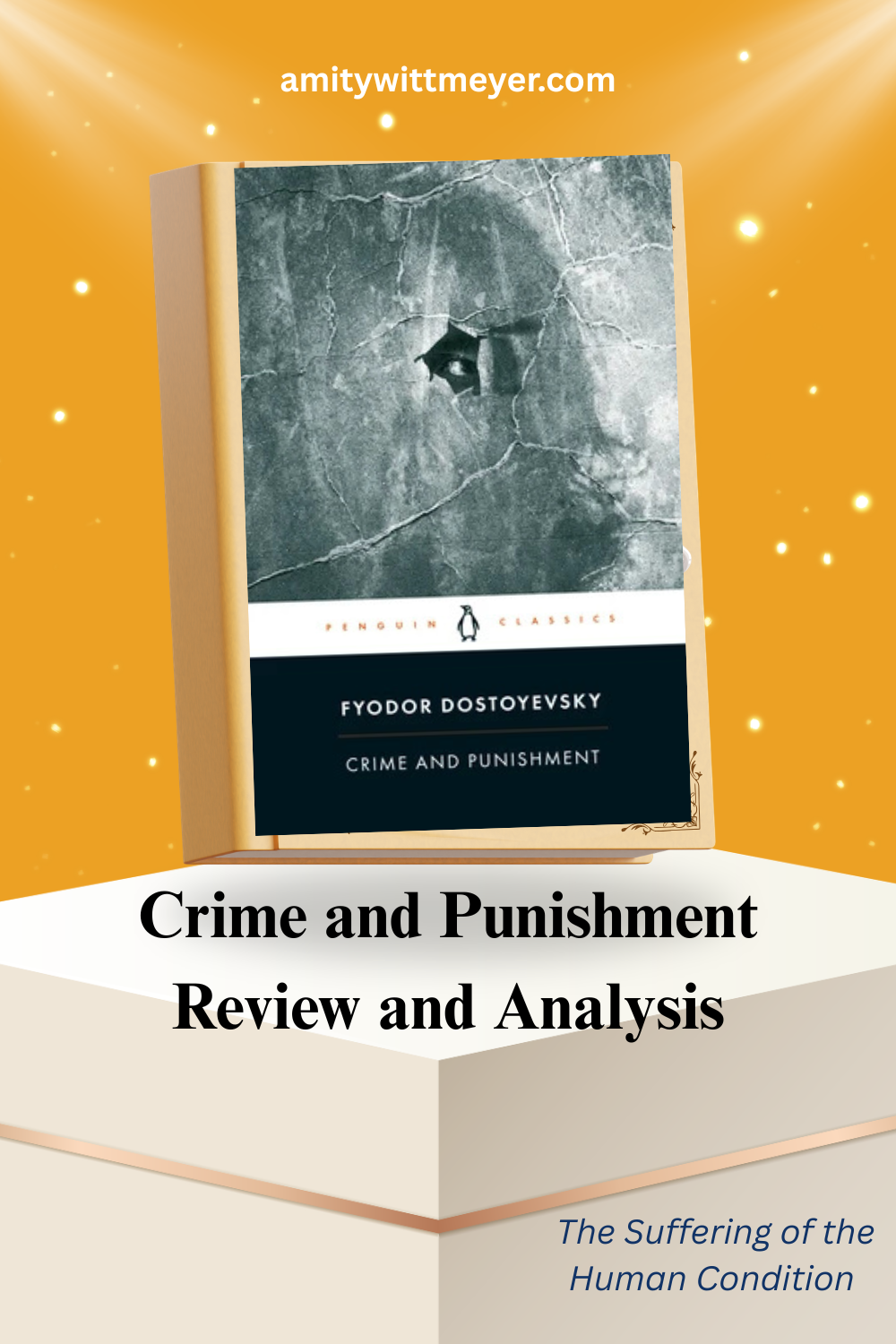
Crime and Punishment offers its reader insights into many themes that plague the human psyche: poverty, the meaninglessness of life, the good within us, and the need for community, reconciliation, and forgiveness.
Raskolnikov is interrogated by multiple characters about an essay he had published in school, one that says crimes that cause good are good and only extraordinary individuals can stay sane after committing a heinous act in the name of good.
Poverty
Raskolnikov and many of the other characters are dirt poor, to the point of starvation and illness due to their living conditions. The stress of unhealthy living poisons these characters’ minds, and many die from psychological torment. Raskolnikov sees the struggle of others and himself and, with his own supreme egoism, decides to murder a woman taking advantage of it in the belief it is a good act and he is above others in doing so.
The Meaningless of Life
Suicide is a constant theme in this novel.
- In the beginning, Raskolnikov sees a woman try to drown herself in the river.
- Svidrigailov commits suicide after finally losing his object of existence: Dunya’s reciprocated love.
- Raskolnikov wishes to end his own life, plagued by guilt and simultaneously defeated by the lack of joy in his life and in the lives of those around him.
Check out the blog post below on how to accurately portray depression!
The Good Within Us
Raskolnikov is not an evil person. He is a scholar whose malnourished mind has led to the unavoidable fate of committing murder to justify his philosophy on the world. His adrenaline, ultimately, is what leads to the crime. However, Raskolnikov is bedridden with guilt and anxiety. He grows distrustful of others and distant. Despite all this, he continues to perform good acts.
- Helping Katrina with her dead husband, giving her money, and remaining a friend to her
- Continues his effort to ensure his sister is in good hands, which he succeeds at
- Continued friendship with Sonya after her parents’ passing
The Need for Community, Reconciliation, and Forgiveness
Raskolnikov is human, at the end of the day. Despite trying to push people away and hide his crime, he eventually understands the illness that keeping a secret holds for someone’s health.
After confessing to Sonya, he tells his sister and says goodbye to his mother. He turns himself in and, in jail, sees Sonya nearly every day. Sonya is the book’s embodiment of Christianity and spirituality. Faith is what helps Raskolnikov start to want to hope for a better chance at life after jail.
She gives him a copy of the Bible, and he finally opens it near the end of the story. After he shows his love for her and sees her forgiveness, he finally understands that there are things worth living for in his life and what a lot of life he’s got left to live!
Final Review
Not only is this book extremely accessible to the common reader, but the character development and dialogue are phenomenal!
Don’t be intimidated by its length, for good characters, themes, ideas, and stories need time to marinate.
Dostoevsky’s Crime and Punishment will live on as a classic for its compelling look into the human experience, questions of morality, injustice, and reconciliation.
Check out the blog post below to help you write better dialogue and character development.
Conclusion
If you want to expand your reading and comprehension skills, a classic novel is the perfect outlet. There are significant reasons why these novels stand the test of time and are still relevant today. Get reading!

Leave a Reply