Intro to Imagery
As a creative writer, you need to utilise literary devices in your pieces, like imagery. By the end of this blog post, you will understand what imagery is, how to apply it in your writing, and how to identify it in the texts you read.
What is Imagery
Imagery is a literary device that creates a mental picture in your reader to establish a scene more effectively and evoke emotion.
According to Spine’s article “Imagery in Writing: Definition, Examples & How to Use It Effectively,”
“Its primary function is to create a mental image or sensory experience, allowing readers to visualize scenes, feel emotions, and become fully immersed in the narrative.”
As a writing tool, imagery is best placed during moments you want to emphasize as significant to your story. Imagery is a great way to create a memorable atmosphere to immerse others in your world and show how your characters are reacting to it.
Why Imagery Matters
- The reader is immersed in your scene, helping drive them to continue reading.
- A story becomes more memorable to your audience as your written mental images stick in their thoughts after finishing the scene.
- Your setting (place, weather conditions, time of day, type of society) is better understood and imagined.
- When using imagery, you can create layered symbolism that other stories lack.
- Surely, in English class, at some point in time, your teacher stressed your interpretation of a scene heavy with mental images. The intention behind this is to ensure you understand that every detail explicitly tailored in certain moments is always intentional and reveals a larger symbolic truth.
Indelible Images in Movies
How can we look at imagery in movies to better understand utilising this literary device in our own writing? For starters, when someone brings up a popular film, there usually is a scene that comes to mind immediately.
Why These Images Help With Creating Imagery
Using a screenwriter’s brain can be extremely useful and highly encouraged when it comes to the visual aspect of your novel. By picturing your story in short images, you can do them justice when it comes to describing the most important elements of the scene.
Those specific scenes are called indelible images, and they’re what good writers have in their minds at all times.
Examples:
- “Here’s Jonny” scene in The Shining
- The opening shark attack of the shiny-dipping woman in Jaws
- The leg lamp in A Christmas Story
- Forrest sitting on the bus bench with chocolates in Forrest Gump
- Jack holding Rose on the ship’s front in Titanic
Once these images are placed, it becomes the memorable tag audiences use to identify films. The same goes when writing. Therefore, your imagery is extremely important since it becomes the staple and possibly the one scene people will remember long after they’ve read your story.
When to Use Indelible Images
In terms of placement, indelible images normally are placed at three points in your story. You want to have one at the start, the climax, and the end of your story. Ultimately, the placements are what drive the story forward.
- The Beginning Image: Sets the scene for why your protagonist is suddenly moved into a change in their routine and pushes the urgency for your story
- The Climax Image: This image displays the height of your story’s suspense and your character being past the point of no return
- The Resoloution Image: Closes your story with a memorable image to establish that the narrative and emotional arc have resolved
Literal vs. Figurative Language
When it comes down to it, there are two types of literary devices when it comes to description and imagery: literal and figurative.
Literal
Literal imagery is just as it sounds…literal. What you say is what is true. There are no underlying meanings or hidden symbolism, for literal language is informative. Let’s look at some examples of this type of imagery.
Examples:
- The sun was orange.
- You smell bad.
- Their face became very pale.
- That present is very heavy.
Figurative
Figurative language is not informative as much as it is used to invoke emotion, add comparative images, and entertain your reader with poetic language.
Looking back at the literal examples, let’s change them to become figurative.
- The sun shone brighter than her newly whitened teeth.
- You smell like you got dragged through a garbage bin a hundred times.
- It was almost like you could see through their face into their brain after the horrific news was told to them.
- The present weighs as much as a workhorse.
Five Types of Imagery
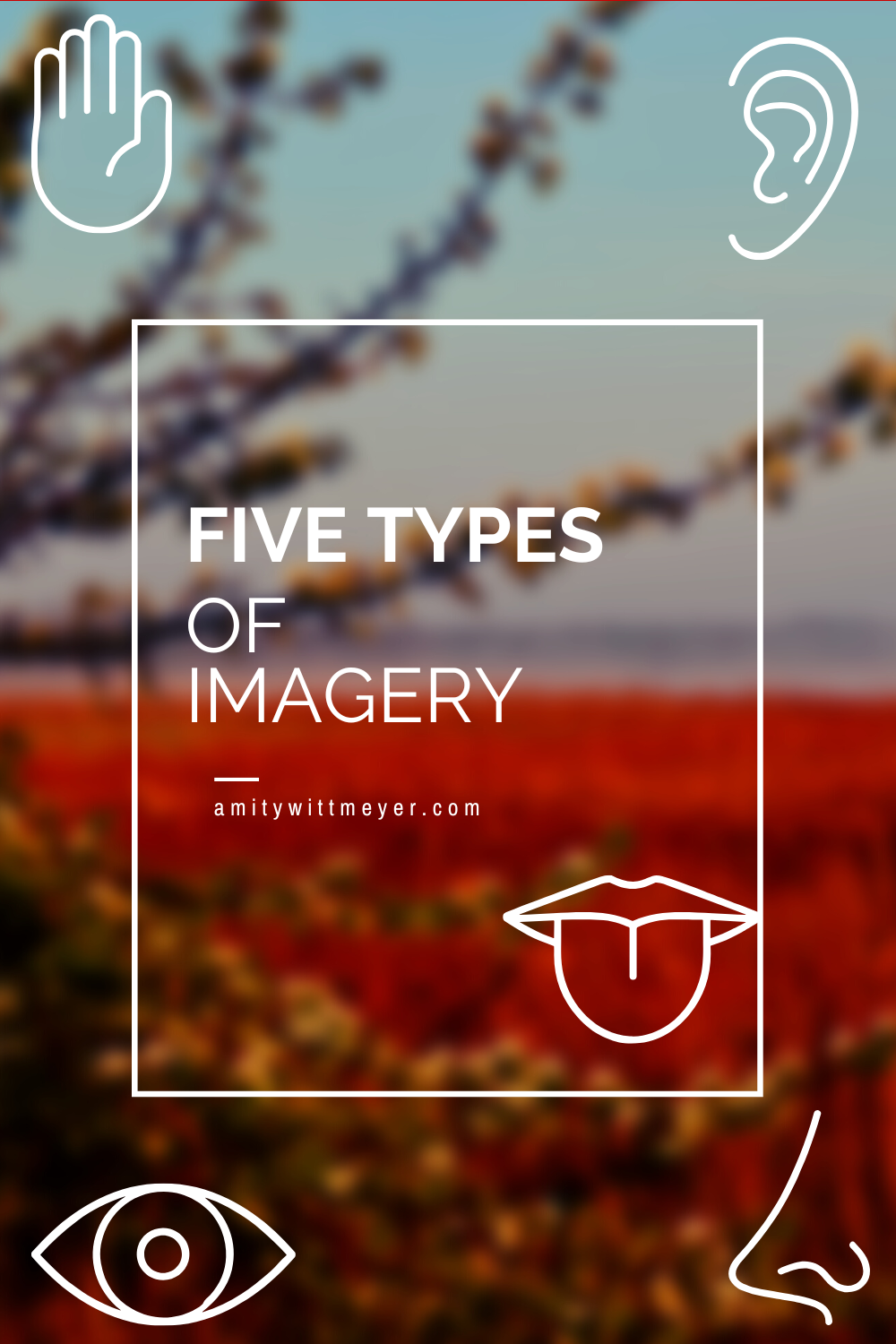
Imagery can be categorized into five separate sections based on which sense the description is playing off of. Using sensual detail is the best way to immerse your reader in your scene effectively.
When writing imagery, think back to indelible images. Picture yourself not only imagining what is happening, but also that you yourself are there. Ask yourself sensory questions.
Want to better practice your description skills? Check out these writing prompts on the blog post below!
According to Lit chart’s article, “Imagery Definition,” here are the five senses to engage with when creating imagery, alongside an example:
- Visual imagery (sight): They look like a breathing corpse.
- Auditory Imagery (hearing): A shriek, like a mother in labor, was heard escaping his lips.
- Olfactory (smell): The pie left the oven and left a warm cinnamon smell wafting about the kitchen.
- Gustatory (taste): They tasted a raw, vinegar-like fluid explode from the chocolate.
- Tactile/Kinesthetic (touch): She threw her hand back after feeling a cold, slimy substance.
Other Literary Devices
When using imagery, other literary devices can help you create the perfect image for your readers. Below are some more helpful tools to equip your writer’s toolbox with.
- Metaphor: compares two unlike things without using like or as
- Onomatopoeia: a sound being spelled out on the page like it’s a word
- Personification: making an object have lifelike qualities
- Simile: comparing two things using like or as
- Hyperbole: extravagant exaggeration
Navigating Imagery In Texts
When reading a story, look for imagery. It will be placed during particular scenes in which the setting, action, or character’s placement is essential when driving the plot.
Think about how these images influence you, as the reader, interpreting the scene by asking yourself the following questions:
- What senses are the authors using?
- Has this symbol shown up in the story before? Where and when?
- What emotions are being invoked in you?
- Why did the author choose to use figurative language vs. literal language to describe this scene?
- Would this moment be considered an indelible image? Does it occur at the start, the climax, or the end of the story?
Conclusion
Imagery is a very helpful tool in creative writing to entertain and immerse your reader into the world you are creating and the emotions you want to invoke. The next time you are reading a story, try to pick out what type of imagery the writer is using, how it makes you feel, and if the image it creates becomes catalogued into your own memory.
Leave a Reply