Disclaimer: This post contains affiliate links; I may earn a commission if you click and buy, at no extra cost to you.
Introduction to Writing Heros
Not all heroes have a large-scale villain they must defeat in a story. Additionally, heroes can be of any shape or size. By the end of this blog post, you will know what the six hero archetypes are and the best way to write them.

What is a Hero
Originally, a hero was a term used in mythology to define someone of noble birth, possessing superhuman abilities, who would courageously perform quests that challenge their abilities and moral character.
However, nowadays the term “hero” is more broadly used to characterize anyone who performs an above-average level of courage and leadership to help others reach a common goal. Of course, the first examples that come to mind when thinking about heroes are the ones we see on film or in the theatre. But a hero could be anyone.
Examples:
- Firefighters
- Polititions
- Teachers
- Children
- Parents
- Army Veterans
- A common citizen
- An animal
Just as long as courage is shown through action, you have written a hero in literature.
According to Mighty Oak’s Program article “What is a hero,” courage is
“An act taken alone with full knowledge that the consequences of that act may be detrimental to one’s physical well-being, livelihood, or acceptance by family and peers for a purpose bigger than themselves.”
When writing a hero, whether or not they are your protagonist, ensure they perform an extreme gesture of courage to make it clear to your reader.
On the opposite side of the spectrum, if you’re interested in writing villains, check out the blog post below!
Different Types of Heroes
1. Epic Hero
The word epic comes from the Greek word Epos, meaning “narrative or song.” An “Epic” was defined as a story that extended the typical length of a tale to recount legendary figures who displayed courage.
Hero Characteristics
An epic hero is among the earliest forms of this character archetype. Think of heroes like Odysseus, who began their adventure at a stage of stability, changed in some way through their journey, before they returned to a state of stability once more.
Epic heroes are larger-than-life and are marked symbols of a culture’s beliefs and practices. Normally, the hero comes to possess super abilities or powers. They are of higher birth, possibly children of the gods, and demonstrate great courage and loyalty in their quest.
When Writing
When you want to write an epic hero, make them selflessly go on a long journey. Their mission should feel grand and a true test of bravery, worthy of people’s remembrance.
Ensure you begin the tale with your hero living in stability. Although your hero must change through the course of their adventure, whether it’s their perspective or actual physical traits (like receiving powers), they still need to finish at a point of stability.
Examples:
- The Odyssey by Homer
- The Iliad by Homer
- Beowulf
- The Aeneid by Virgil
- The Epic of Gilgamesh
- Antigone by Sophocles
2. The Classical Hero
Characteristics
A classical hero is someone who possesses superior traits that separate them from the crowd. These traits are normally courage, cleverness, the ability to fight, or other skills. Typically, this hero appears normal compared to other contemporary characters and remains humble as they continue to demonstrate brave actions.
Unlike an epic hero, a classical hero doesn’t embody divine superabilities and represents a culture’s ideas. They do not have to be of noble birth or a descendant of a god.
When Writing
Remember that your classical hero doesn’t need to be of noble birth. They must, however, embody the common characteristics of a hero: courage, strength, good leadership, and always loyally staying on the virtuous path.
They should be almost bizarrely perfect as a figure to look up to and rely on. You can start them out as appearing average until their powers begin to grow.
Examples:
- Adventures of Huckleberry Finn by Mark Twain
- To Kill a Mockingbird by Harper Lee
- Gulliver’s Travels by Jonathan Swift
- Harry Potter and the Sorcerer’s Stone by J. K. Rowling
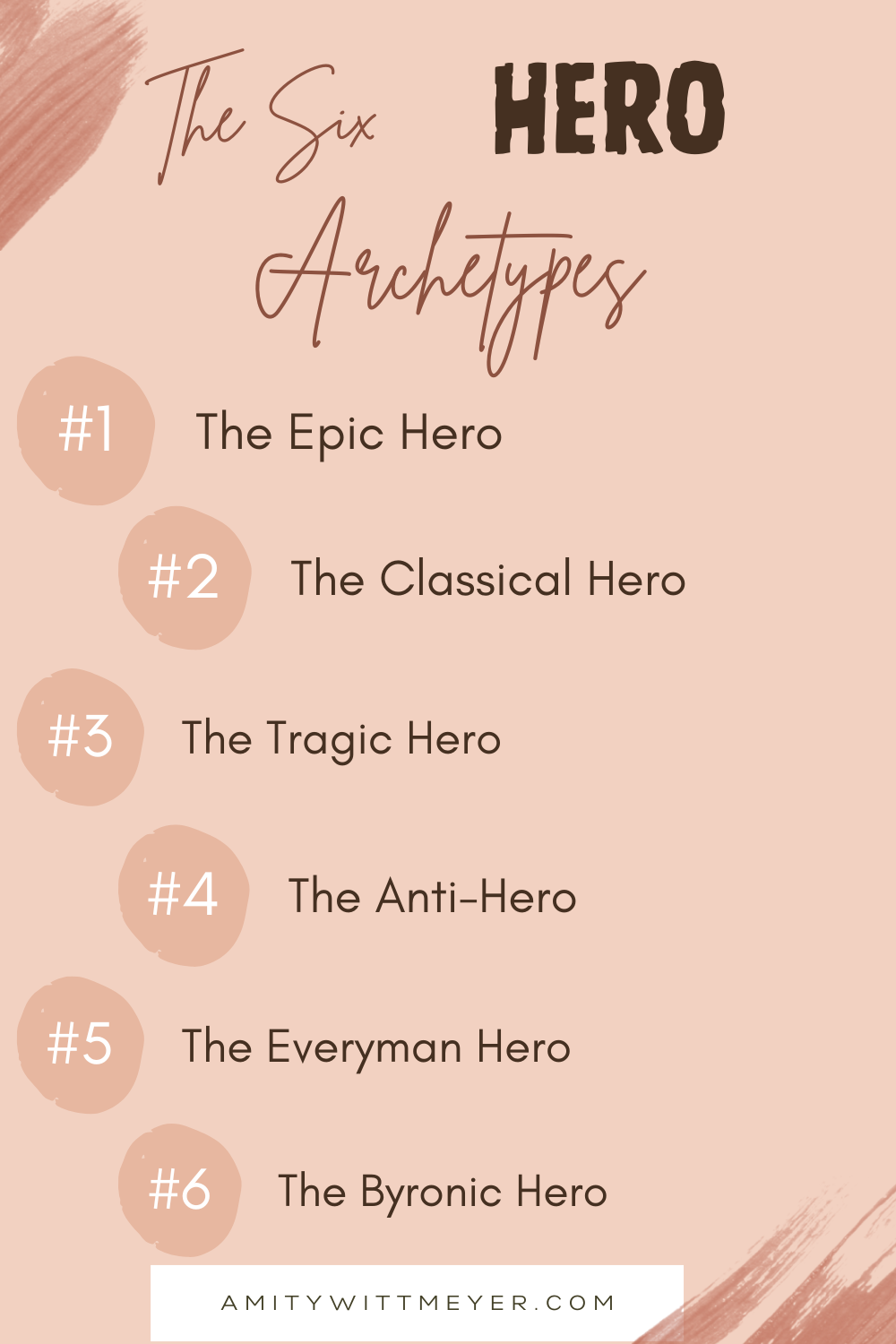
3. Tragic Hero
Aristotle was the first to identify this character archetype. Tragic heroes were used as a cautionary tale to implore readers to be wiser when making life decisions.
Charactieristics
A tragic hero has a fatal flaw or makes a judgment error that leads to their downfall. For example, they are vain or overly jealous.
Due to this, they are less larger-than-life than an epic or classical hero and are more relatable to your audience.
When Writing
You want your audience to feel the tension of your hero’s flaw, knowing it will inevitably be the cause of their downfall. Ultimately, they will fall from triumph into tragedy by the end of your story. Draw out an emotional response from your reader to implore them to act differently.
Examples:
- Oedipus Rex by Aristotle
- Macbeth by Shakespeare
- Hamlet by Shakespeare
- Peter Pan by J.M. Barrie
- Othello by Shakespeare
- Frankenstein by Mary Shelley
- Wicked by Gregory Maguire
4. Anti-Hero
Characterisitics
Antiheroes struggle to overcome or reconcile with their duality. Unlike classical heroes, they possess similar qualities to a villain, with their own self-interest compelling their actions. However, they still get the job done since the traditional hero can’t swoop in and save the day.
To quote The Rockle’s article, “Heroes in Literature: Types and Examples of True Literary Heroes,” antiheroes are
“someone who’s lacking in heroic virtues and is completely ill-fit for the role but willing to get the job done – in their own way.”
When Writing
Since the anti-hero doesn’t possess the typical hero characteristics, early on reveal to your reader their vulnerabilities to help them become more relatable, as they will inevitably do the right thing.
Examples:
- One Flew over the Cuckoo’s Nest by Alexandre Dumas
- A Clockwork Orange by Anthony Burgess
- The Picture of Dorian Grey by Oscar Wilde
- Fahrenheit 451 by Ray Bradbury
- Strange Case of Dr. Jekyll and Mr. Hyde by Robert Louis Stevenson
Read an analysis of Strange Case of Dr. Jekyll and Mr. Hyde by Robert Louis Stevenson in the blog post below!
5. Everyman Hero
Characteristics
An everyman hero is someone without special abilities or a strong leadership position, yet saves the day through an act of tremendous courage. They are designed to represent an average civilian.
To quote Writer’s Edit’s article “The Top 9 Types Of Literary Heroes,”
“If anything makes this type of character special, it’s their compassion, determination and willingness to sacrifice for others.”
When Writing
When writing, make your everyman hero appear in extraordinary circumstances to propel them to act heroically. They should seem common yet have relatable qualities. Lastly, make sure they possess strong morals that continue to help them act selflessly.
Examples:
- The Lord of the Rings by J. R. R. Tolkien
- The Hobbit by J. R. R. Tolkien
- The Hitchhiker’s Guide to the Galaxy by Douglas Adams
- The Secret Life of Walter Mitty by James Thurber
- The Awakening by Kate Chopin
6. Byronic Hero
A bryonic hero comes from the writer Lord Byron and is a subcategory of a romantic hero.
Characteristics
This hero archetype involves a character who seems sullen and even rude on the surface, yet possesses a virtuous underlying layer that becomes uncovered once they reject social rules.
According to Masterclass’s article “6 Common Hero Archetypes in Literature,” this hero is
“known for being prickly, sullen and inscrutable on the outside, while possessing a rich inner life under the surface.”
When writing
When writing a Byronic hero, make sure to show their change. Something must push them to question their society’s norms and break them for a virtuous goal. They will probably become social outcasts for their rebellious nature.
Byronic heroes are moody, selfish, and possess a dark history. However, they should be redeemed by their charisma as they navigate the social outskirts.
Examples:
- Pride and Prejudice by Jane Austen
- Jane Eyre by Charlotte Brontë
- Wuthering Heights by Emily Brontë
Conclusion
Whether your hero is on an epic journey destined for them or just someone willing to step in when no one else will, they will demonstrate the courage it takes to be memorable. Create heroes your reader can relate to, be inspired by, or be taught a lesson from.

Leave a Reply